Minister of Higher Education and Scientific Research on a Working and Inspection Visit to the University of 8 May 1945 in Guelma
departmental activities

Minister of Higher Education and Scientific Research on a Working and Inspection Visit to the University of 8 May 1945 in Guelma

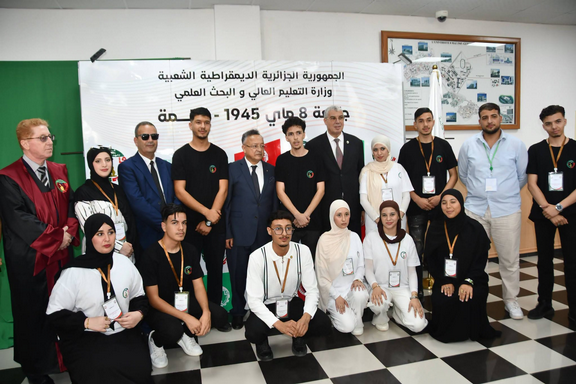
The Minister of Higher Education and Scientific Research, Mr. Kamel Baddari, paid a working and inspection visit to the University of 8 May 1945 in Guelma on Thursday, 22 October 2026. The visit aimed to review efforts to develop university education and scientific research, improve the quality of higher education, and promote innovation, digitalisation and entrepreneurship in response to students’ aspirations and in support of sustainable local development.
Accompanied by the Wali of Guelma Province, the Minister began his visit at the Souidani Boudjemaa University Complex, where he was welcomed by local authorities and representatives of the university community, including vice-rectors, deans, the institute director and students.
As part of efforts to foster a culture of innovation on university campuses, encourage student initiatives, enhance the value of scientific research outcomes, and strengthen entrepreneurship, engagement with the economic sector and international cooperation, the visit included several university facilities, structures and projects.

First: Promoting innovation, artificial intelligence and digitalisation
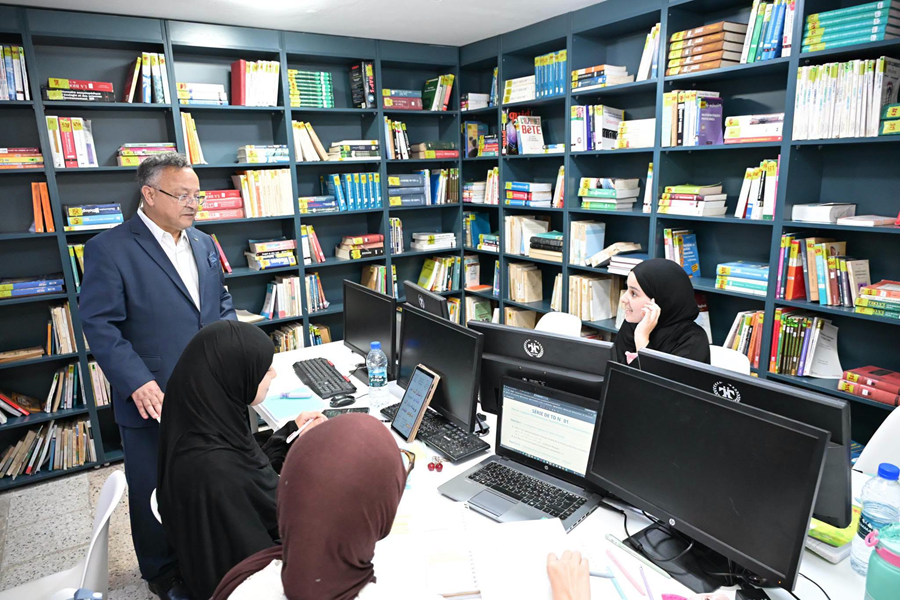
The Minister inaugurated the Artificial Intelligence House and reviewed a range of student projects developed within its framework, reflecting the university’s commitment to expanding the use of artificial intelligence technologies and encouraging innovation on campus.
He also visited the university incubator and attended a presentation on digital platforms developed to facilitate student life and improve university services. On this occasion, the digital platform “Sanad” was inaugurated. The platform is designed to provide intelligent psychological support using artificial intelligence technologies.
The visit continued with a tour of the outdoor exhibition and the stands showcasing university-owned economic subsidiaries. The Minister reviewed innovative student projects and received presentations on the achievements of the Technology and Innovation Support Centre and the Entrepreneurship Development Centres. He also learned about various initiatives and projects related to international cooperation and innovation, particularly the PNR, LEADS and NEMSIS programmes and projects.
In the same context, the Minister met with a group of students developing entrepreneurial projects and innovative ideas. He listened to their presentations and learned about their aspirations, emphasising the importance of supporting innovative initiatives and providing the conditions necessary to turn them into viable projects and facilitate their further development.

Second: Improving student accommodation and university services
The Minister inspected the new Amdour Aïssa university residence for female students, which has a capacity of 1,000 beds. He toured its various facilities, including the restaurant, accommodation blocks, sports hall and activity room, to assess their readiness and the conditions provided for receiving and accommodating students, with the aim of ensuring a university environment conducive to academic achievement and student activities.
As part of efforts to strengthen environmental awareness on university campuses, the Minister, accompanied by the Wali of Guelma Province, also planted a tree in a symbolic initiative aimed at promoting environmental protection and expanding green spaces.

Third: Strengthening partnerships between the university and its economic and social environment
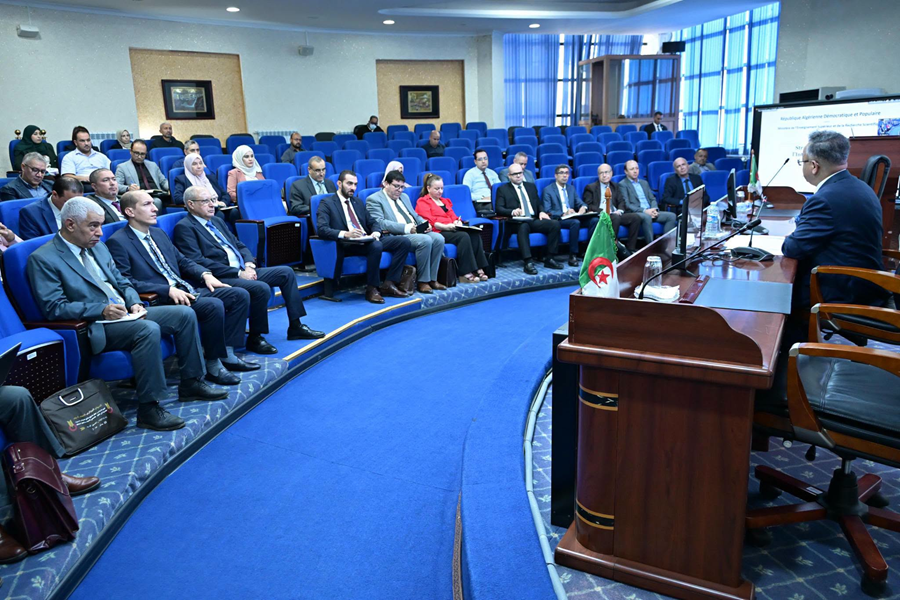
The visit concluded with an official meeting with the university community. During the meeting, the Minister praised the efforts of the University of 8 May 1945 in Guelma and its contributions to promoting innovation and digitalization and strengthening engagement with the economic and social sectors. He reaffirmed the Ministry’s commitment to continuing to support higher education institutions and promote their initiatives and development projects.
The meeting also witnessed the signing of several cooperation and partnership agreements with economic and social partners. These agreements aim to strengthen ties between the university and its surrounding environment, while enhancing the university’s contribution to translating scientific research results into practical applications and transforming innovative ideas into projects with economic and social value.

Higher Education Minister Inspects “CUB 3” and “El Djorf” University Residences

ministerial activities

Higher Education Minister Inspects “CUB 3” and “El Djorf” University Residences

As part of field monitoring of students’ living conditions, the Minister of Higher Education and Scientific Research, Kamel Badari, visited the “CUB 3” (male) and “El Djorf” (female) university residences on the evening of Wednesday, October 21, 2026. The visit was marked by direct engagement and frank dialogue with the university community.

The visit provided an opportunity to see first-hand the reality of student life, particularly accommodation and catering services, as well as sports and cultural activities, which are essential pillars in shaping students’ character and strengthening their balance and sense of belonging to the university.

The Minister also toured the wings that underwent renovation and refurbishment over the summer, listened directly to students’ concerns and aspirations, and gauged their level of satisfaction with the services provided, reflecting a management approach based on listening and a field presence.

The atmosphere of the meeting reflected the students’ satisfaction, confirming that continuous communication between officials and students is a key pillar for improving university services and living conditions within the residences.

Mr. Kamel Baddari Chairs the Fifth Multisectoral Meeting to Monitor the Implementation of the National Artificial Intelligence Strategy

ministerial activities

Mr. Kamel Baddari Chairs the Fifth Multisectoral Meeting to Monitor the Implementation of the National Artificial Intelligence Strategy

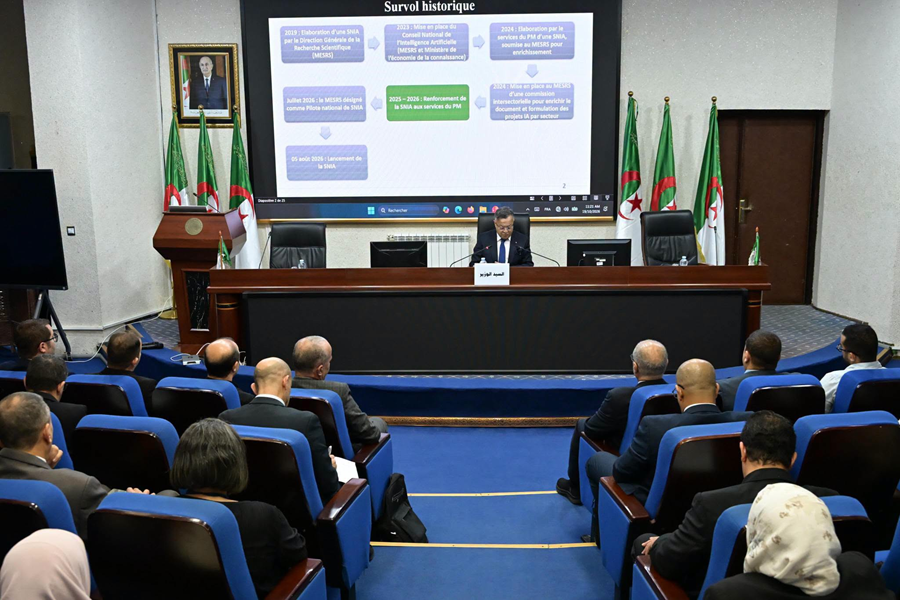
The Minister of Higher Education and Scientific Research, Mr. Kamel Baddari, chaired the proceedings of the fifth multisectoral meeting devoted to monitoring the implementation of the National Artificial Intelligence Strategy on the morning of 20 October 2026.
On this occasion, progress made by the thematic committees responsible for implementing the strategy’s key pillars was reviewed as follows:
Data and Infrastructure Committee
Presentation of the main outlines of the implementation plan for operations relating to data governance and the acquisition of the infrastructure required to develop Algeria’s capabilities in artificial intelligence.
Finance Committee
Initial estimates were established for public funding allocated to infrastructure acquisition. Coordination with representatives of economic enterprises also continued, following the meeting held the previous day (https://www.mesrs.dz/en/2026/10/minister-of-higher-education-and-scientific-research-chairs-a-working-session-on-mobilising-national-funding-and-developing-high-performance-computing-and-artificial-intelligence-infrastructure/ ), with the aim of developing a proposal to establish a joint financing fund.
Large Language Models Committee
Tasks were allocated among the various stakeholders involved in developing a language model specialized in Algerian tax legislation, with the participation of representatives of the Directorate General of Taxes. The equipment required to carry out the project has also been made available, and a four-month deadline has been set for its delivery.
Doctoral Studies Committee
A proposed framework was presented for a national doctoral school covering the various fields related to artificial intelligence, alongside specialized thematic doctoral schools aligned with priority economic sectors, particularly healthcare, energy, irrigation, transport, agriculture and public administration.
A competitive admission process for a doctoral school bringing together the three national higher schools of computer science in Algiers, Béjaïa and Sidi Bel Abbès will also be announced shortly. The school is expected to offer 102 places.
International Cooperation Committee on Artificial Intelligence Applications
Coordination with the services of the Ministry of Foreign Affairs is continuing, with the aim of benefiting from international initiatives related to artificial intelligence and strengthening opportunities for cooperation in this field.
Thematic Research Network in Artificial Intelligence
The main outlines of a draft executive decree concerning a National Research Programme (PNR) dedicated to artificial intelligence were presented. The launch of a call for research project proposals under the thematic network is also scheduled for November 2026.
These efforts form part of the continued implementation of the National Artificial Intelligence Strategy through coordinated multisectoral action, the development of infrastructure and financing mechanisms, and the strengthening of scientific research and specialized training. They aim to contribute to the establishment of an integrated national artificial intelligence ecosystem.

Minister of Higher Education and Scientific Research Chairs a Working Session on Mobilising National Funding and Developing High-Performance Computing and Artificial Intelligence Infrastructure

ministerial activities

Minister of Higher Education and Scientific Research Chairs a Working Session on Mobilising National Funding and Developing High-Performance Computing and Artificial Intelligence Infrastructure

As part of the implementation of the National Artificial Intelligence Strategy, the Minister of Higher Education and Scientific Research, Mr. Kamel Baddari, chaired a working session on Monday, 19 October 2026, at the Ministry’s headquarters, with representatives of several economic enterprises. The meeting focused on exploring ways to mobilise national funding and coordinate efforts to develop high-performance computing infrastructure and strengthen scientific research and innovation capabilities in the field of artificial intelligence.

The meeting highlighted the need to develop an integrated national programme extending to 2030, built around four complementary strategic objectives:

First: Mobilising the necessary financial resources. With contributions from public- and private-sector enterprises, the aim is to secure the funding required to acquire graphics processing units (GPUs), thereby strengthening Algeria’s advanced computing capabilities and providing researchers and engineers with the technical resources needed to develop innovative solutions.

Second: Funding scientific research and applied projects. Funding and research efforts will be directed towards addressing the country’s economic and technological needs, strengthening links between scientific research and the economic sector, and facilitating the translation of research findings into practical solutions, products and services with added value.

Third: Strengthening the scientific and technical capabilities of the specialised centre for artificial intelligence and data. This objective seeks to enable the centre to play a central role in advancing cutting-edge research, generating knowledge and keeping pace with global technological transformations.

Fourth: Attracting high-level scientific and technological talent. This includes attracting national and international expertise, with particular attention to Algerian professionals and researchers living abroad. The objective will be pursued through attractive recruitment mechanisms that provide an advanced research environment, stimulating professional conditions and competitive salaries, in accordance with applicable legislation.

In this context, the participants agreed to establish a joint working framework bringing together representatives of economic enterprises, the National Commission responsible for implementing the National Artificial Intelligence Strategy, and the relevant public institutions. This framework will be tasked with preparing an operational roadmap extending to 2030. The roadmap will identify needs and priorities, establish funding mechanisms and partners’ contributions, define implementation phases and timelines, and introduce precise indicators to measure progress and assess scientific, economic and technological impact.

This approach reflects a strategic vision that views investment in artificial intelligence as an investment in knowledge, human capital and national innovation capacity, rather than merely the acquisition of equipment and technologies. It also underscores that building an integrated national ecosystem in this field is a shared responsibility requiring coordinated efforts across sectors and economic enterprises, as well as the mobilisation of national talent and its engagement in projects with tangible scientific, economic and technological impact.

The ultimate aim is to strengthen Algeria’s technological sovereignty, consolidate the knowledge economy, and make scientific research and innovation key drivers of sustainable development and national economic growth.

Minister of Higher Education and Scientific Research Presents the Sector’s Budget to the Finance and Budget Committee of the People’s National Assembly

Ministerial activities

Minister of Higher Education and Scientific Research Presents the Sector’s Budget to the Finance and Budget Committee of the People’s National Assembly

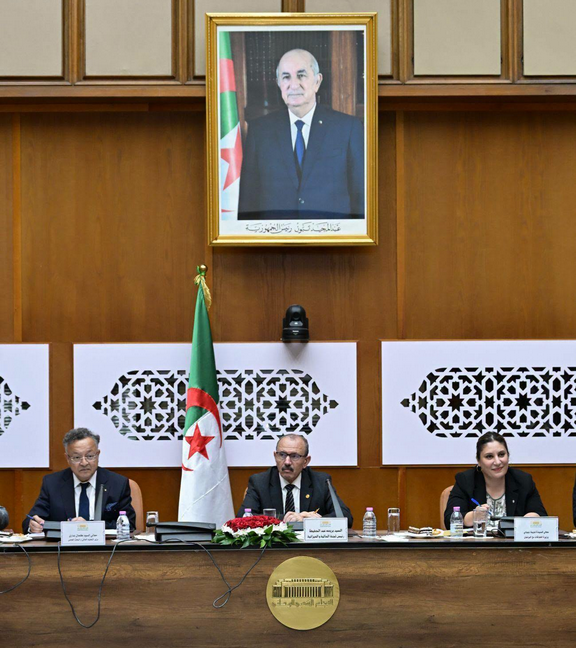
The Minister of Higher Education and Scientific Research, Mr. Kamel Baddari, presented an overview of the proposed budget for his sector under the 2027 Finance Bill on Saturday afternoon, 17 October 2026, at the headquarters of the People’s National Assembly (APN). The presentation was delivered before members of the Assembly’s Finance and Budget Committee, in the presence of Ms. Nadjiba Djilali, Minister of Relations with Parliament.
At the opening of the proceedings, the Committee Chair emphasized that the examination of sectoral budgets goes beyond assessing the financial allocations provided. It also involves evaluating whether these allocations address actual priorities and are used effectively to improve sector performance. With regard to higher education and scientific research, he stressed the importance of consolidating the university’s role as a hub for knowledge production, skills development and innovation, in line with the needs of the national economy.
In his address, Mr. Kamel Baddari presented the proposed budget for his sector, amounting to DZD 843.81 billion in commitment authorizations, representing an increase of 8.25%, and DZD 847.26 billion in payment appropriations.
He also highlighted the sector’s main achievements and recent developments, noting that the academic year had witnessed comprehensive digitalization covering a total student population of 1.84 million. He further stated that 79% of training programmes were directed towards science, technology and the professions of the future.
During his presentation, the Minister highlighted several key achievements and initiatives, including:
• Development of infrastructure and academic specializations: Establishment of the National Higher School of Optics and Engineering in Sétif, alongside the introduction of new specializations in medicine and health sciences in coordination with the Ministry of Health.
• Modernization of training programmes: Introduction of seven new dual-degree programmes across five universities and launch of the electronic version of the Algerian Framework of Qualifications and Certifications in Higher Education, developed in coordination with the various ministerial sectors.
• Enhancement of scientific research: Introduction of a new mechanism allowing doctoral theses to be submitted in the form of a coherent collection of scientific works, with a view to enhancing the recognition and value of researchers’ scientific output.
• Strengthening international openness: Attraction of 334 international students from 39 different nationalities and launch of the second edition of the “Study in Algeria” programme.
• Promotion of quality assurance: Continued support for universities seeking quality certification and expansion of the “Fourth-Generation University” model.
• Strengthening ties with Algerian scientific talent abroad: Establishment of an institutional framework for the Algerian scientific community abroad and creation of a higher advisory council attached to the President of the Republic.
• Support for innovation and entrepreneurship: Promotion of strategic innovative projects and presentation of 80 products, alongside the acquisition of the first national accreditation in the field of training on unmanned aerial vehicle (drone) systems.
Following the presentation, members of the Committee were given the opportunity to raise their concerns and submit comments on various issues relating to the management and development of the sector. The main issues discussed included:
• Improving university services: Addressing pressure on accommodation capacity in university residences and easing transport constraints by opening new routes, particularly in major cities, to facilitate student mobility.
• Modernizing university catering: Accelerating the digitalization of catering services to improve their management and ensure the provision of complete and balanced meals.
• Enhancing the quality of university education: Strengthening the quality of higher education and moving away from a predominantly quantitative approach towards a greater focus on the quality of training and its outcomes, thereby improving graduates’ skills and competencies.
• Improving faculty working conditions: Providing staff housing for university teachers and modernizing and equipping scientific laboratories to meet teaching and research requirements.
• Supporting national talent and innovation: Addressing the brain drain, strengthening support for innovative projects, supporting business incubators and promoting university-based entrepreneurship.
These discussions form part of the review of the sector’s proposed budget for 2027 and aim to assess budgetary priorities and their contribution to improving the quality of university education, strengthening scientific research and innovation, and enhancing services provided to the university community.

Minister of Higher Education and Scientific Research Inspects the Kouba University Residence for boys and the “Yousfi Amhamed” University Residence for girls

ministerial activities

Minister of Higher Education and Scientific Research Inspects the Kouba University Residence for boys and the “Yousfi Amhamed” University Residence for girls.

As part of ongoing field monitoring of student living conditions, efforts to improve university services and enhance students’ living environment, and the strengthening of a hands-on approach based on listening, follow-up, and effectively addressing the concerns of the university community, the Minister of Higher Education and Scientific Research, Mr. Kamel Baddari, conducted an inspection visit on the evening of Monday, October 12, 2026, to the Kouba university residence for boys and the “Yousfi Amhamed” university residence for girls. The visit aimed to assess student accommodation conditions and the extent to which their daily needs are being met.

The visit included an inspection of accommodation and catering conditions, an assessment of the quality of meals served and the variety of menus, as well as a review of the safety and security measures in place and the facilities available for sports and cultural activities.

The visit also provided an opportunity to meet with students and listen to their concerns and views regarding the services provided. The students expressed their satisfaction with the level of support and their living conditions, highlighting the importance of direct field monitoring in evaluating university services and continuously improving them.

The Minister of Higher Education and Scientific Research Congratulates the Two Students Who Won Gold and Silver Medals at the African Canoe and Kayak Championships

ministerial activities

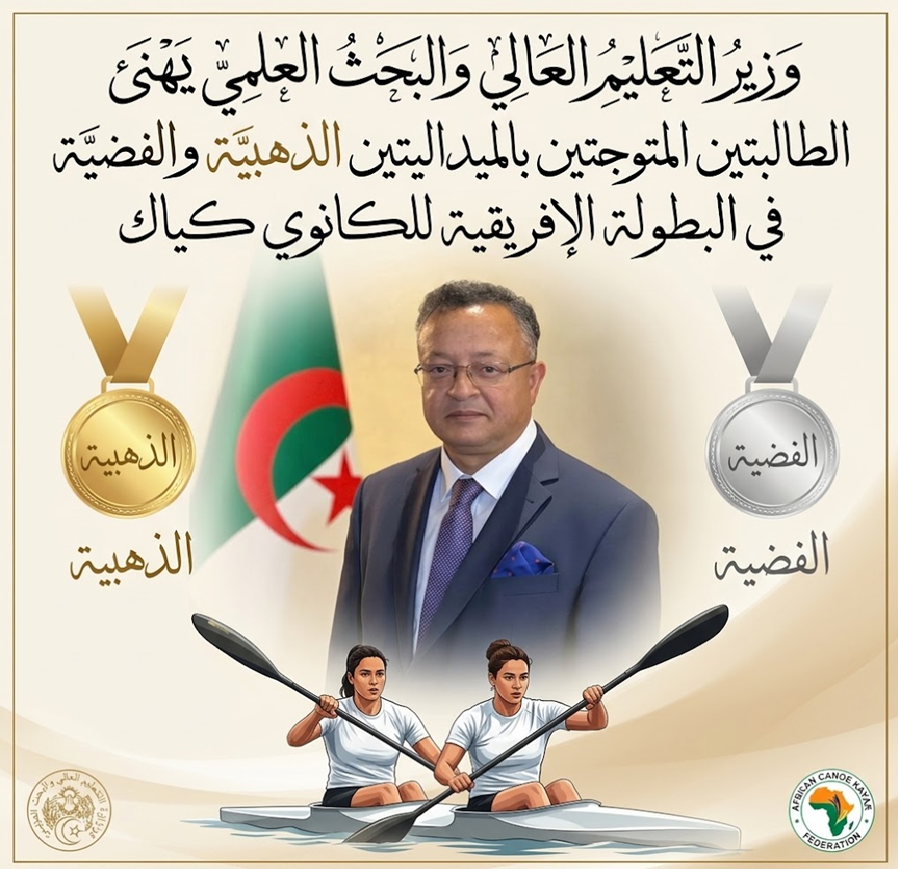
The Minister of Higher Education and Scientific Research Congratulates the Two Students Who Won Gold and Silver Medals at the African Canoe and Kayak Championships.

The Minister of Higher Education and Scientific Research, Mr. Kamel Baddari, congratulated, through his official social media account, the two students who won gold and silver medals at the African Canoe and Kayak Championships.
His congratulatory message read:
“Congratulations to students Rebouh Selsabil and Aya on winning gold and silver medals at the African Canoe and Kayak Championships, held at the Keddara Dam in Boumerdès Province.”

Minister’s Meetings

activités ministérielles

Minister’s Meetings

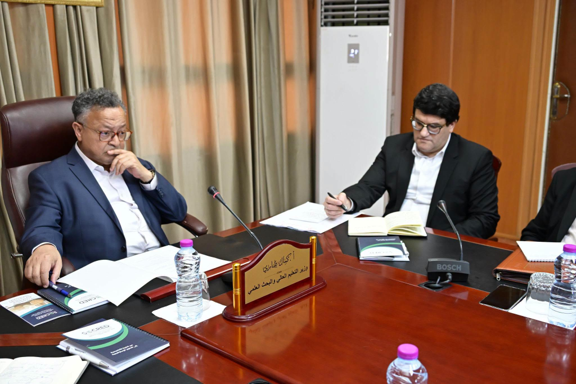
The Minister of Higher Education and Scientific Research, Mr. Kamel Baddari, chaired a coordination meeting with ministry officials on the evening of Sunday, 11 October 2026, in the presence of the rectors of the University of Algiers 3 and the University of Blida 1. The meeting focused on monitoring the progress of the 2026–2027 academic year and reviewing developments in the sector’s priority programmes, projects and policy matters.
The meeting addressed several strategic and organizational areas, including:
1. Academic Year and Education: Monitoring the effective commencement of classes, ensuring compliance with the prescribed semester teaching hours, expanding English-language instruction, developing individualized study pathways, and following up on the dual-degree training project in medicine and the bachelor’s degree programme taught in English.
2. University Services and Student Life: Reviewing cleanliness standards in university residences, transport and accommodation conditions, improving students’ living environment, and monitoring rehabilitation programmes for university residences.
3. Infrastructure and New Projects: Monitoring budgets allocated to the rehabilitation of university residences, projects involving new infrastructure and medical faculties, and development and refurbishment programmes for university institutions. Discussions also covered the introduction of new activity headings in the budget classification and the rehabilitation project for the University of Health in Algiers.
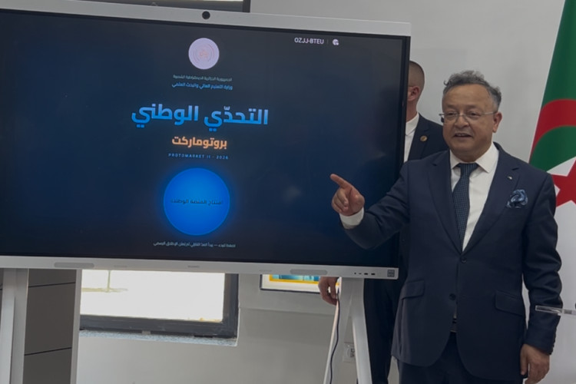
4. Innovation and Entrepreneurship: Following up on existing and new projects under the “ProtoMarket” initiative, business creation projects, the development of university-affiliated company subsidiaries, and measures to promote innovation and entrepreneurship. The meeting also reviewed the integration of financing and stock-market investment mechanisms.
5. Digital Transformation and Artificial Intelligence: Monitoring progress on the artificial intelligence project and the development of the second version of the “PROGRES” information system, while ensuring consistency and alignment of figures and indicators across the relevant departments and institutions.
6. Attracting International Students and Strengthening International Cooperation: Reviewing the situation of international students and their reception arrangements, including transportation from airports to university institutions. Discussions also addressed the development of the “Study in Algeria” programme, international cooperation initiatives and partnership projects.
7. Governance and Human Resources: Following up on draft regulatory texts, recruitment procedures for medical sciences lecturers and teacher-researchers, the updating of recruitment criteria, and the management of assets transferred to the higher education sector, alongside evaluation and valorization matters.
8. Budget and Future Programmes: Reviewing the proposed budget for 2027, identifying the financial requirements associated with new programmes, and monitoring construction and development projects scheduled for the 2026–2027 academic year.

Minister of Higher Education and Scientific Research Congratulates Algerian Researchers Named Among the World’s Top 2% Most Influential Scientists in 2026

activités ministérielles

Minister of Higher Education and Scientific Research Congratulates Algerian Researchers Named Among the World’s Top 2% Most Influential Scientists in 2026

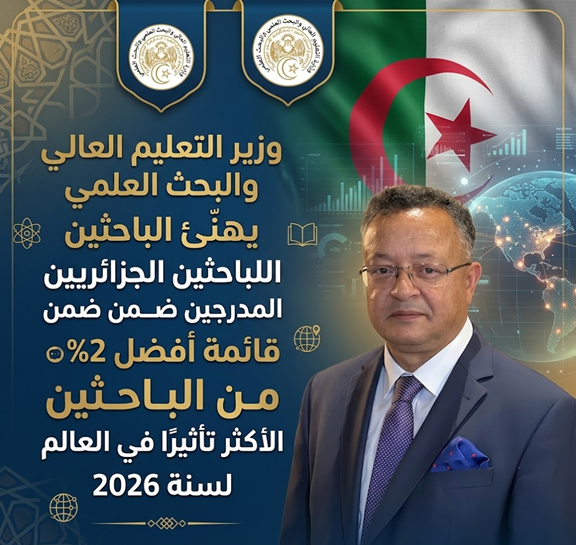
The Minister of Higher Education and Scientific Research, Mr. Kamel Baddari, congratulated the Algerian academic and research community in a post published on his official social media account, following the inclusion of a number of Algerian researchers in the Stanford–Elsevier list of the world’s top 2% most influential scientists for 2026. This achievement reflects the growing presence of national scientific talent on the international research scene.

The congratulatory message reads as follows:

“I extend my congratulations to the Algerian academic and research community on this outstanding scientific achievement, marked by the inclusion of a number of our researchers in the Stanford–Elsevier list of the world’s top 2% most influential scientists for 2026.

This progress is reflected in the increase in the number of Algerian researchers included in the career-long scientific impact list, from 38 to 45 researchers, including four ranked among the top ten in the Maghreb. In the annual scientific impact list, their number has risen from 80 to 101 researchers, including five ranked among the top ten in the Maghreb.

These achievements highlight the wealth of scientific talent within our universities and their capacity to contribute to knowledge production and expand the horizons of innovation.

While recognizing this well-deserved distinction, we reaffirm our commitment to continuing our efforts to strengthen the position of Algerian universities within the international scientific community, enhance their research profile and make knowledge a driving force for national development and the shaping of the future.

Congratulations to our distinguished researchers. I wish them continued success and further achievements in the service of science and the nation.”

ProtoMarket 2: Funding 937 Innovative Projects to Promote Innovation and Entrepreneurship in Higher Education

activités ministérielles

ProtoMarket 2: Funding 937 Innovative Projects to Promote Innovation and Entrepreneurship in Higher Education

In a significant step towards promoting innovation and fostering an entrepreneurial culture within the university environment, the final deliberations of the second edition of the national challenge “ProtoMarket 2” resulted in the selection of 937 innovative projects for funding, out of a total of 2,110 applications submitted through the national platform. The total funding envelope amounts to DZD 1,188,400,000, with an estimated average of approximately DZD 1.27 million per project.
This initiative forms part of the efforts undertaken by the Ministry of Higher Education and Scientific Research to harness the innovative potential of students, graduates and doctoral students, and to support them in turning their creative ideas into prototypes that can be further developed, commercialized and economically valorized. It also aims to enhance the technological value of products emerging from universities and encourage the creation of start-ups, thereby helping transform knowledge and scientific research into innovative economic projects while opening up new opportunities for wealth creation and national development.
At the regional level, the selected projects are distributed across the country’s three regions. The Eastern region leads with 333 projects, followed by the Central region with 317 projects and the Western region with 287 projects.
This distribution reflects the broadening scope of participation and the growing momentum of innovation and entrepreneurship across national higher education institutions. It also highlights the diversity of the university innovation ecosystem and the increasing number of initiatives aimed at transforming creative ideas into projects with economic and technological value.
In terms of technological fields, the selected projects cover eight major areas. Digital applications and platforms rank first, with 314 projects, followed by artificial intelligence-based applications and platforms with 171 projects, electronic equipment and devices with 146 projects, and connected solutions and the Internet of Things (IoT) with 136 projects.
The selected projects also cover biological and food products; materials, chemistry and manufactured products; pharmaceutical, cosmetic and healthcare products; as well as services and training.
This diversity highlights the expanding scope of innovation within universities and the wide range of fields in which university talent applies scientific knowledge and technical expertise to develop innovative solutions that address economic and social needs. It also strengthens opportunities for technological valorization and the economic development of promising ideas and projects.
In terms of supervision and support, the results involve 98 university institutions out of 117 targeted university incubators. This reflects the broad reach of support and mentoring mechanisms designed for innovative projects and strengthens their prospects of progressing from the idea stage to practical implementation.
These results reaffirm the central role of university incubators as strategic platforms for hosting innovative initiatives, guiding project holders through the various stages of development, and enhancing their technological maturity, ultimately leading to the development of prototypes with potential for economic valorization and commercialization.
This momentum reflects the direction of Algerian universities towards fostering a culture of innovation and initiative, while strengthening the integration of education, scientific research and the requirements of economic and social development. It also demonstrates their commitment to transforming knowledge and creativity into added value by encouraging start-up creation, supporting a knowledge- and technology-based economy, contributing to wealth creation, and promoting sustainable national development.
As a reminder, ProtoMarket is a national mechanism designed to support and finance the development of innovative ideas into prototypes, paving the way for their further development into products suitable for manufacturing and commercialization. It therefore helps strengthen opportunities for valorizing university innovations and transforming them into projects with economic value, while encouraging start-up creation and fostering an entrepreneurial culture within the university environment.