Higher Education Minister Inspects “CUB 3” and “El Djorf” University Residences

ministerial activities

Higher Education Minister Inspects “CUB 3” and “El Djorf” University Residences

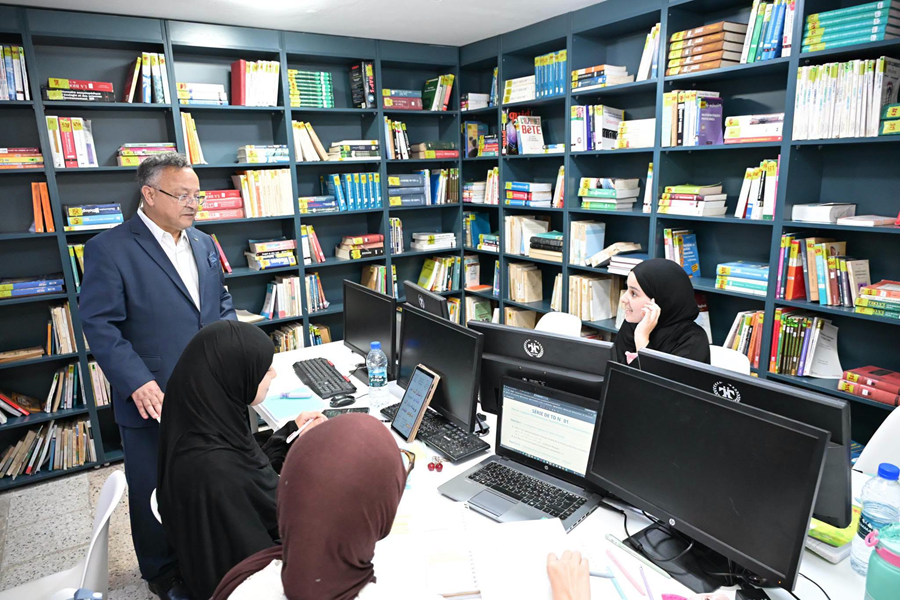
As part of field monitoring of students’ living conditions, the Minister of Higher Education and Scientific Research, Kamel Badari, visited the “CUB 3” (male) and “El Djorf” (female) university residences on the evening of Wednesday, October 21, 2026. The visit was marked by direct engagement and frank dialogue with the university community.

The visit provided an opportunity to see first-hand the reality of student life, particularly accommodation and catering services, as well as sports and cultural activities, which are essential pillars in shaping students’ character and strengthening their balance and sense of belonging to the university.

The Minister also toured the wings that underwent renovation and refurbishment over the summer, listened directly to students’ concerns and aspirations, and gauged their level of satisfaction with the services provided, reflecting a management approach based on listening and a field presence.

The atmosphere of the meeting reflected the students’ satisfaction, confirming that continuous communication between officials and students is a key pillar for improving university services and living conditions within the residences.

Mr. Kamel Baddari Chairs the Fifth Multisectoral Meeting to Monitor the Implementation of the National Artificial Intelligence Strategy

ministerial activities

Mr. Kamel Baddari Chairs the Fifth Multisectoral Meeting to Monitor the Implementation of the National Artificial Intelligence Strategy

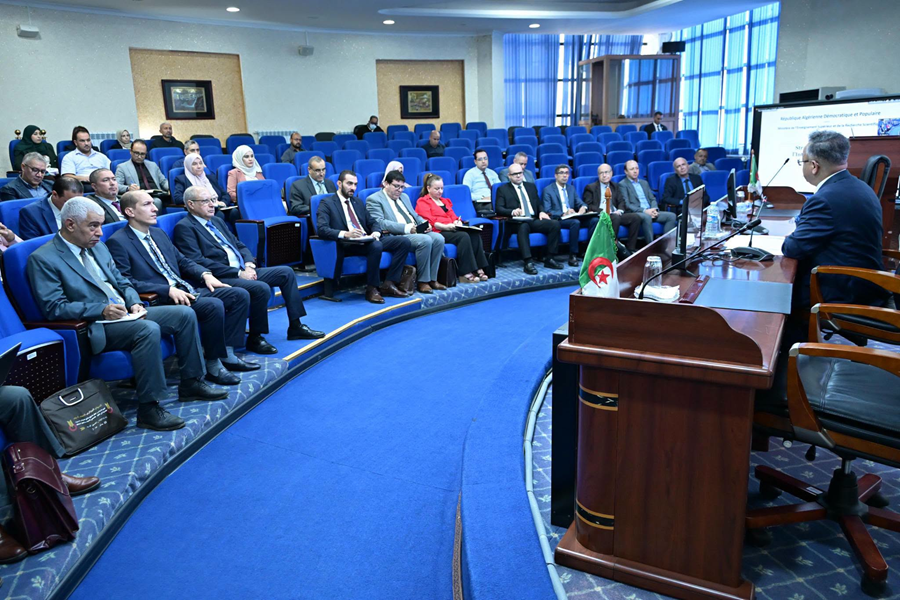
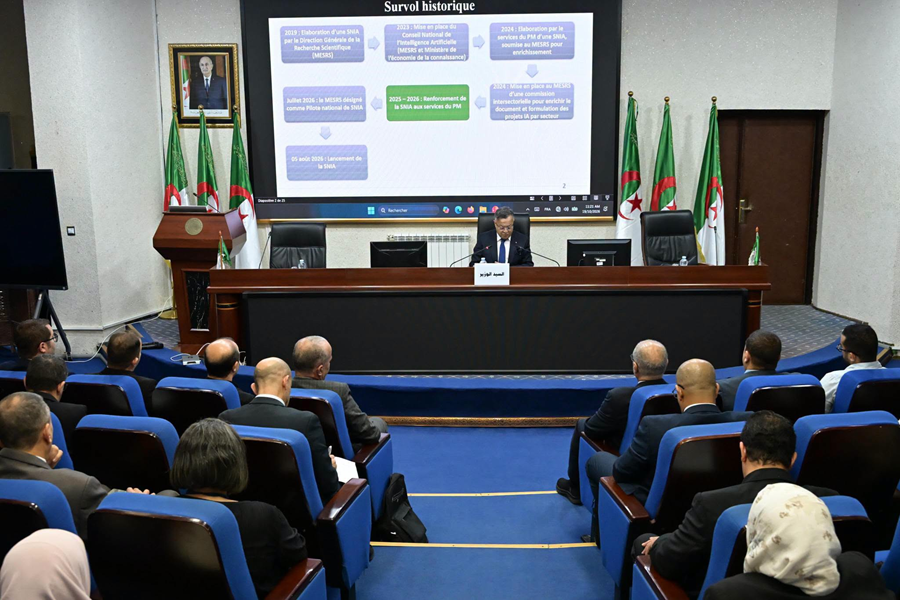
The Minister of Higher Education and Scientific Research, Mr. Kamel Baddari, chaired the proceedings of the fifth multisectoral meeting devoted to monitoring the implementation of the National Artificial Intelligence Strategy on the morning of 20 October 2026.
On this occasion, progress made by the thematic committees responsible for implementing the strategy’s key pillars was reviewed as follows:
Data and Infrastructure Committee
Presentation of the main outlines of the implementation plan for operations relating to data governance and the acquisition of the infrastructure required to develop Algeria’s capabilities in artificial intelligence.
Finance Committee
Initial estimates were established for public funding allocated to infrastructure acquisition. Coordination with representatives of economic enterprises also continued, following the meeting held the previous day (https://www.mesrs.dz/en/2026/10/minister-of-higher-education-and-scientific-research-chairs-a-working-session-on-mobilising-national-funding-and-developing-high-performance-computing-and-artificial-intelligence-infrastructure/ ), with the aim of developing a proposal to establish a joint financing fund.
Large Language Models Committee
Tasks were allocated among the various stakeholders involved in developing a language model specialized in Algerian tax legislation, with the participation of representatives of the Directorate General of Taxes. The equipment required to carry out the project has also been made available, and a four-month deadline has been set for its delivery.
Doctoral Studies Committee
A proposed framework was presented for a national doctoral school covering the various fields related to artificial intelligence, alongside specialized thematic doctoral schools aligned with priority economic sectors, particularly healthcare, energy, irrigation, transport, agriculture and public administration.
A competitive admission process for a doctoral school bringing together the three national higher schools of computer science in Algiers, Béjaïa and Sidi Bel Abbès will also be announced shortly. The school is expected to offer 102 places.
International Cooperation Committee on Artificial Intelligence Applications
Coordination with the services of the Ministry of Foreign Affairs is continuing, with the aim of benefiting from international initiatives related to artificial intelligence and strengthening opportunities for cooperation in this field.
Thematic Research Network in Artificial Intelligence
The main outlines of a draft executive decree concerning a National Research Programme (PNR) dedicated to artificial intelligence were presented. The launch of a call for research project proposals under the thematic network is also scheduled for November 2026.
These efforts form part of the continued implementation of the National Artificial Intelligence Strategy through coordinated multisectoral action, the development of infrastructure and financing mechanisms, and the strengthening of scientific research and specialized training. They aim to contribute to the establishment of an integrated national artificial intelligence ecosystem.

Minister of Higher Education and Scientific Research Chairs a Working Session on Mobilising National Funding and Developing High-Performance Computing and Artificial Intelligence Infrastructure

ministerial activities

Minister of Higher Education and Scientific Research Chairs a Working Session on Mobilising National Funding and Developing High-Performance Computing and Artificial Intelligence Infrastructure

As part of the implementation of the National Artificial Intelligence Strategy, the Minister of Higher Education and Scientific Research, Mr. Kamel Baddari, chaired a working session on Monday, 19 October 2026, at the Ministry’s headquarters, with representatives of several economic enterprises. The meeting focused on exploring ways to mobilise national funding and coordinate efforts to develop high-performance computing infrastructure and strengthen scientific research and innovation capabilities in the field of artificial intelligence.

The meeting highlighted the need to develop an integrated national programme extending to 2030, built around four complementary strategic objectives:

First: Mobilising the necessary financial resources. With contributions from public- and private-sector enterprises, the aim is to secure the funding required to acquire graphics processing units (GPUs), thereby strengthening Algeria’s advanced computing capabilities and providing researchers and engineers with the technical resources needed to develop innovative solutions.

Second: Funding scientific research and applied projects. Funding and research efforts will be directed towards addressing the country’s economic and technological needs, strengthening links between scientific research and the economic sector, and facilitating the translation of research findings into practical solutions, products and services with added value.

Third: Strengthening the scientific and technical capabilities of the specialised centre for artificial intelligence and data. This objective seeks to enable the centre to play a central role in advancing cutting-edge research, generating knowledge and keeping pace with global technological transformations.

Fourth: Attracting high-level scientific and technological talent. This includes attracting national and international expertise, with particular attention to Algerian professionals and researchers living abroad. The objective will be pursued through attractive recruitment mechanisms that provide an advanced research environment, stimulating professional conditions and competitive salaries, in accordance with applicable legislation.

In this context, the participants agreed to establish a joint working framework bringing together representatives of economic enterprises, the National Commission responsible for implementing the National Artificial Intelligence Strategy, and the relevant public institutions. This framework will be tasked with preparing an operational roadmap extending to 2030. The roadmap will identify needs and priorities, establish funding mechanisms and partners’ contributions, define implementation phases and timelines, and introduce precise indicators to measure progress and assess scientific, economic and technological impact.

This approach reflects a strategic vision that views investment in artificial intelligence as an investment in knowledge, human capital and national innovation capacity, rather than merely the acquisition of equipment and technologies. It also underscores that building an integrated national ecosystem in this field is a shared responsibility requiring coordinated efforts across sectors and economic enterprises, as well as the mobilisation of national talent and its engagement in projects with tangible scientific, economic and technological impact.

The ultimate aim is to strengthen Algeria’s technological sovereignty, consolidate the knowledge economy, and make scientific research and innovation key drivers of sustainable development and national economic growth.
Minister of Higher Education and Scientific Research Inspects the Kouba University Residence for boys and the “Yousfi Amhamed” University Residence for girls

ministerial activities

Minister of Higher Education and Scientific Research Inspects the Kouba University Residence for boys and the “Yousfi Amhamed” University Residence for girls.

As part of ongoing field monitoring of student living conditions, efforts to improve university services and enhance students’ living environment, and the strengthening of a hands-on approach based on listening, follow-up, and effectively addressing the concerns of the university community, the Minister of Higher Education and Scientific Research, Mr. Kamel Baddari, conducted an inspection visit on the evening of Monday, October 12, 2026, to the Kouba university residence for boys and the “Yousfi Amhamed” university residence for girls. The visit aimed to assess student accommodation conditions and the extent to which their daily needs are being met.

The visit included an inspection of accommodation and catering conditions, an assessment of the quality of meals served and the variety of menus, as well as a review of the safety and security measures in place and the facilities available for sports and cultural activities.

The visit also provided an opportunity to meet with students and listen to their concerns and views regarding the services provided. The students expressed their satisfaction with the level of support and their living conditions, highlighting the importance of direct field monitoring in evaluating university services and continuously improving them.

The Minister of Higher Education and Scientific Research Congratulates the Two Students Who Won Gold and Silver Medals at the African Canoe and Kayak Championships

ministerial activities

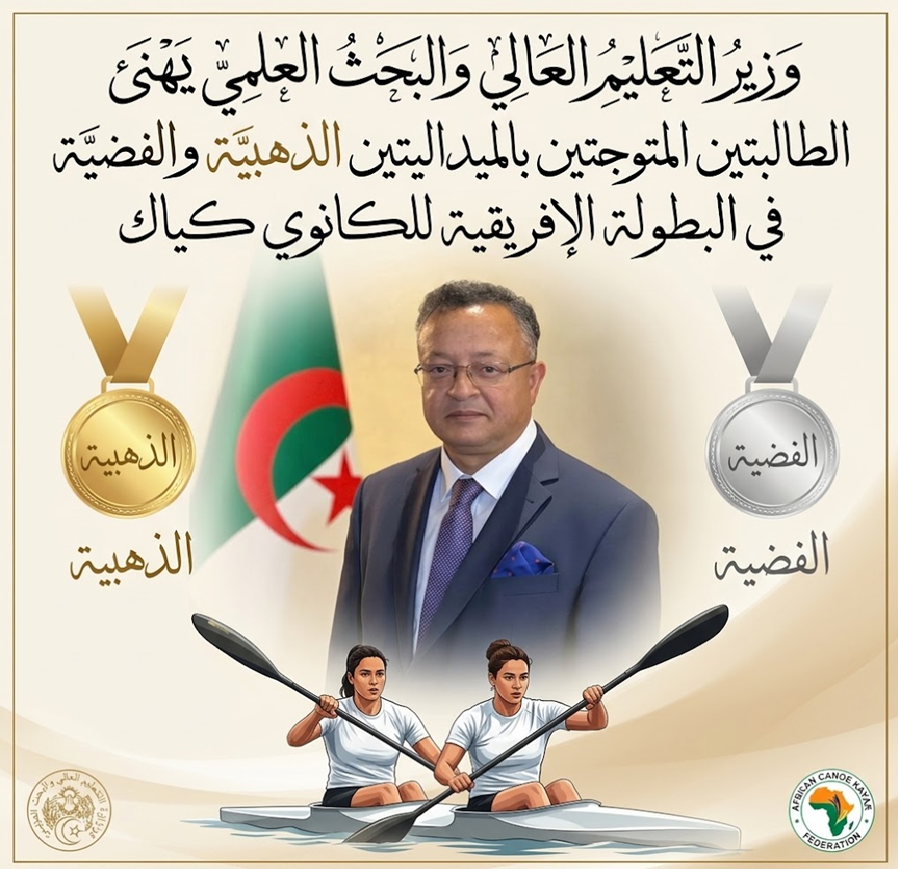
The Minister of Higher Education and Scientific Research Congratulates the Two Students Who Won Gold and Silver Medals at the African Canoe and Kayak Championships.

The Minister of Higher Education and Scientific Research, Mr. Kamel Baddari, congratulated, through his official social media account, the two students who won gold and silver medals at the African Canoe and Kayak Championships.
His congratulatory message read:
“Congratulations to students Rebouh Selsabil and Aya on winning gold and silver medals at the African Canoe and Kayak Championships, held at the Keddara Dam in Boumerdès Province.”

Minister of Higher Education and Scientific Research welcomes the establishment of the “University Fund for Innovation and Startups”

ministerial activities

Minister of Higher Education and Scientific Research welcomes the establishment of the “University Fund for Innovation and Startups”

The Minister of Higher Education and Scientific Research, Mr. Kamel Baddari, welcomed, through his official social media account, the efforts made by the University of Algiers 3 “Ibrahim Sultan Cheibout” in supporting innovation and promoting startups through its financial investment company, following the approval by the Commission for the Organization and Supervision of Stock Exchange Operations (COSOB) of the establishment of the “University Fund for Innovation and Startups.”
In his post, the Minister stated:
“We welcome the approval by the Commission for the Organization and Supervision of Stock Exchange Operations (COSOB) of the establishment of the ‘University Fund for Innovation and Startups’, a Venture Capital Mutual Fund (FCPR), with initial assets exceeding 280 million Algerian dinars.
This fund, which will be managed by the financial investment company of the University of Algiers 3, represents a significant step toward building an integrated university and economic ecosystem, positioning the university as an active partner in financing innovation and supporting startups and promising projects led by students and researchers.
This achievement further strengthens our commitment to the ‘Empowering University’, which does not merely produce knowledge, but also works to transform it into added value, innovative projects, businesses, and opportunities for growth and wealth creation.
Moreover, integrating venture capital into the financing instruments available for innovative university projects opens up promising prospects for students, researchers, and idea and project holders. It supports the transition of innovation from the university environment to the market and investment, thereby creating a bridge between students’ ideas and sources of financing, and between investment and prospects for wealth and job creation.”

Minister of Higher Education and Scientific Research examines ways to strengthen scientific research on rare earth elements in the Hoggar Mountains

ministerial activities

Minister of Higher Education and Scientific Research examines ways to strengthen scientific research on rare earth elements in the Hoggar Mountains


The Minister of Higher Education and Scientific Research, Mr. Kamel Baddari, met on Tuesday afternoon, September 29, 2026, at the Ministry’s headquarters, with researcher Ismaïl Zarrouk, a member of the Supreme Council of National Scientific Competencies Abroad and a member of the research staff at the Massachusetts Institute of Technology (MIT) in the United States, accompanied by several Earth sciences researchers from the Houari Boumediene University of Science and Technology.

The meeting focused on exploring ways to strengthen and promote scientific research on rare earth elements in the Hoggar mountain range, thereby contributing to a deeper scientific understanding of the region’s geological resources and exploring opportunities for their valorization through scientific research and cooperation between Algerian scientific expertise based in Algeria and abroad.

Minister of Higher Education and Scientific Research Presides over the Opening of the Fourth General Assembly of the “Africa Uni Net” Network in Saïda

ministerial activities

Minister of Higher Education and Scientific Research Presides over the Opening of the Fourth General Assembly of the “Africa Uni Net” Network in Saïda

The Minister of Higher Education and Scientific Research, Mr. Kamel Baddari, presided today, September 28, 2026, at the “Dr. Moulay Tahar” University of Saïda, over the opening of the Fourth General Assembly of the “Africa Uni Net” network, with the participation of 55 representatives from universities in 17 member countries of the network.
In his address, the Minister of Higher Education and Scientific Research, Mr. Kamel Baddari, commended the efforts made by Algerian universities to strengthen their openness to universities worldwide, thereby expanding areas of cooperation and promoting exchanges in scientific and research activities, as well as the transfer of expertise and knowledge among academics and researchers, contributing to improved academic and research performance.
The visit’s programme also included the inauguration of the Faculty of Medicine, as well as a teaching room equipped with virtual immersion technology, a visit to a technical facility dedicated to advanced technologies, and the inauguration of smart and connected teaching rooms, as part of the process of transforming the university into a Fourth-Generation University.
The Minister of Higher Education and Scientific Research concluded his visit to the “Dr. Moulay Tahar” University of Saïda with a meeting with the university’s senior officials. On this occasion, he commended the level achieved by the university in terms of international openness, particularly through hosting a significant number of African and European higher education and research institutions, as well as developing genuine academic and scientific partnerships within the framework of South-South and North-South cooperation.
The Minister also congratulated the members of the university community for their efforts to foster a culture of digital transformation, develop digital infrastructure, and promote the use of modern technologies, thereby consolidating the university’s transformation into a modern and smart institution and strengthening the position of Saïda University within the network of Fourth-Generation Universities.

President of the Republic Mr. Abdelmadjid Tebboune Receives Members of the Higher Council of the National Scientific Community Abroad

ministerial activities

President of the Republic Mr. Abdelmadjid Tebboune Receives Members of the Higher Council of the National Scientific Community Abroad

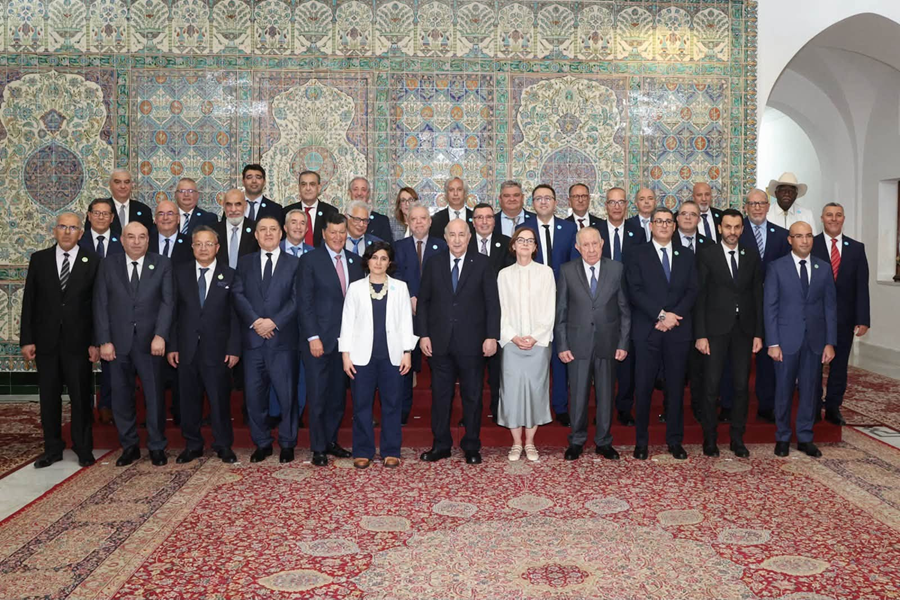
President of the Republic Mr. Abdelmadjid Tebboune received, on Sunday, September 27, 2026, at the Presidency of the Republic, the members of the Higher Council of the National Scientific Community Abroad.
The meeting was attended by Mr. Brahim Merad, Minister of State in charge of the General Inspectorate of State Services and Local Authorities; Army General Saïd Chanegriha, Minister Delegate to the Minister of National Defence and Chief of Staff of the People’s National Army; Mr. Kamel Baddari, Minister of Higher Education and Scientific Research; Mr. Mohamed Seddik Aït Messaouden, Minister of Health; Mr. Wassim Kouidri, Minister of Pharmaceutical Industry; Mr. Noureddine Ouadah, Minister of Knowledge Economy, Start-ups and Micro-enterprises; Mr. Nasreddine Ben Taïfour, Adviser to the President of the Republic in charge of Education, Higher Education, Vocational Training and Culture; and Mr. Sofiane Chaib, Secretary of State to the Minister of Foreign Affairs, in charge of the National Community Abroad.
In a statement following the President of the Republic’s meeting with the Council members, Professor Elias Zerhouni, Coordinator of the Council, said that he had noted during the meeting «the President of the Republic’s conviction that Algeria today needs to achieve genuine progress in various fields, drawing on its scientists both inside and outside the country».
In this regard, he stated: «We have the capabilities to do so, and our country is ready for this step», noting that the Council members had heard «the constructive ideas put forward by the President of the Republic» and had briefed him on the progress made so far towards «developing practical projects and programmes that will contribute to national development».
The following is the list of members of the Higher Council of the National Scientific Community Abroad:
Mr. Elias Zerhouni — Biomedical Engineering.
Mr. Kamel Youssef Toumi — Mechanical Engineering.
Mr. Belkacem Haba — Materials Science.
Mr. Karim Zeghib — Materials Science.
Mr. Mohamed Lachmi — Civil Engineering.
Ms. Lydia Bourouiba — Mathematics and Physics.
Ms. Malika Aït Boudris — Biology.
Mr. Smaïn Zerrouk — Geophysics.
Mr. Bachir Taouli — Medicine.
Mr. El Ayachine Kerbach — Logistics.
Mr. Noureddine Ghefour — Environmental Sciences.
Mr. Othmane Boukettaya — Computer Science.
Mr. Karim Djouani — Artificial Intelligence.
Mr. Mohamed Ben Naâmoun — Computer Science.
Mr. Touhami Mekrani — Chemistry.
Mr. Karim Chouli — University President.
Ms. Yasmine Belkaid — Immunology.
Mr. Mohamed Bournane — Physics.
Mr. Ezzeddine Bouzegsou — Materials Science.
Mr. Abdelaziz Hamzaoui — Mechanical Engineering.
Mr. Boualem Ben Attallah — Computer Science.
Mr. Mohamed Ben Omar Senouci — Computer Engineering.
Mr. Abdelhamid Mellouk — Artificial Intelligence.
Mr. Abdelhak Zoubir — Electrical Engineering.
Mr. Mohamed Kakoua — Animal Production.
Mr. Yahia Chebloun — Biology.
Mr. Fayçal Djeridane — Medicine.

Mr. Kamel Baddari and Mr. Elias Zerhouni Chair the Proceedings of the First Meeting of the Higher Council of the National Scientific Community Abroad

ministerial activities

Mr. Kamel Baddari and Mr. Elias Zerhouni Chair the Proceedings of the First Meeting of the Higher Council of the National Scientific Community Abroad

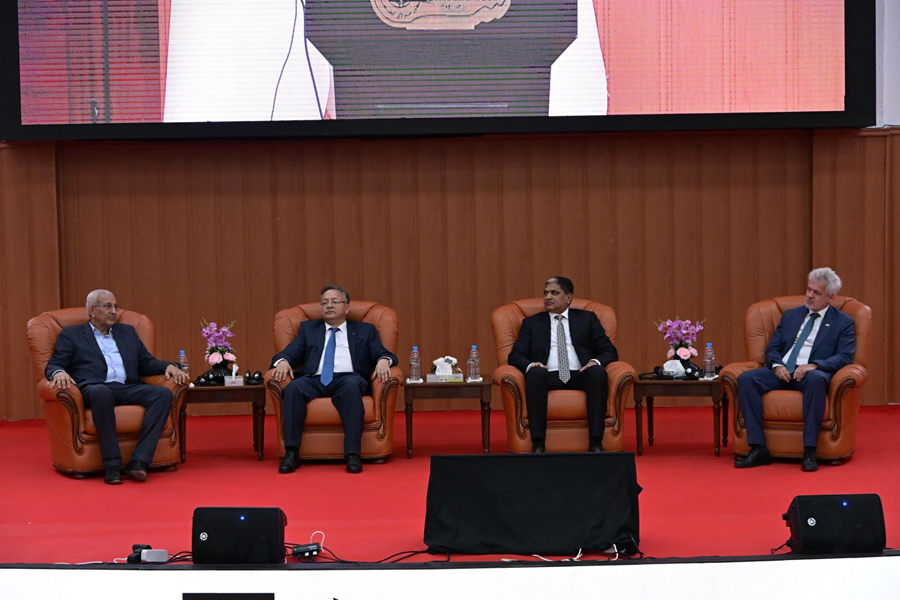
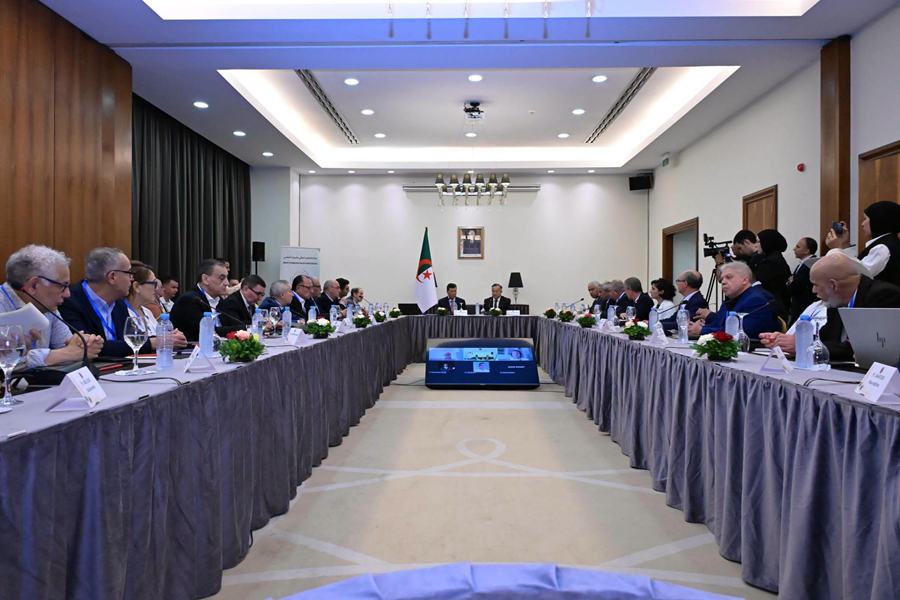
The proceedings of the first meeting of the Higher Council of the National Scientific Community Abroad began today, sunday, September 27, 2026, in Algiers, in implementation of the provisions of Presidential Decree No. 26-293 dated 25 Rabie El Aouel 1448, corresponding to September 7, 2026, establishing this higher advisory body, placed directly under the President of the Republic, endowed with legal personality and financial autonomy, with its headquarters located in the wilaya of Algiers.
In his keynote address during the opening session, the Minister of Higher Education and Scientific Research praised the strong sense of national commitment demonstrated by Algerian scientists and highly qualified professionals abroad, who have responded to the call of the homeland and placed their expertise and capabilities at the service of its scientific and economic development.
Mr. Kamel Baddari stressed that the establishment of this Council reflects the political will of the President of the Republic, Mr. Abdelmadjid Tebboune, to establish a permanent and structured institutional framework for mobilizing Algerian expertise across different countries and making it an active partner in the national development process. This includes connecting Algerian scientific expertise abroad with the national higher education, scientific research and innovation system, drawing on their expertise to provide scientific and technological advice, supporting a rapid and effective transition towards a knowledge-based economy, and advancing the development of modern technologies.
He added that the establishment of this Council aims to move from occasional relations and scattered contacts towards a permanent and structured institutional partnership, thereby ensuring continuity of cooperation and the optimal mobilization of Algerian expertise residing abroad.
He further noted that Algeria has a rich pool of internationally recognized expertise, talent and knowledge capable of providing strong momentum to institutional and technological modernization and strengthening the capacities of the national system in the fields of science, innovation and technology.
For his part, the Council’s Coordinator, Mr. Elias Zerhouni, outlined in his address the strategic dimensions of the missions entrusted to this body. He emphasized that the Council will work to put forward proposals and perspectives concerning projects of national importance, assess their scientific and technological viability, contribute to the country’s development process, strengthen knowledge exchange and strategic foresight in advanced and emerging technologies, and promote national and international scientific dialogue on current issues and challenges.
The inaugural session was attended by the Council’s President and members of the General Assembly, which comprises 28 members, including 27 scientists and experts from the National Scientific Community Abroad, selected on the basis of their international scientific standing and their priority strategic areas of expertise, in addition to six representatives of strategic ministerial sectors and three executives of economic institutions abroad involved in research and development activities.
During this session, participants are examining and adopting the Council’s draft internal regulations, setting the agenda, establishing specialized committees, and preparing the annual work plan, with a view to coordinating efforts and examining projects of national importance through an institutional and methodological approach.
The proceedings are expected to result in recommendations, studies and comprehensive annual reports to be submitted directly to the Presidency of the Republic. These outputs will contribute, in particular, to assessing the scientific and technological feasibility of major projects and providing the analyses and expertise needed to inform public policy, in support of the country’s sustainable development objectives.