Minister of Higher Education and Scientific Research examines ways to strengthen scientific research on rare earth elements in the Hoggar Mountains


The Minister of Higher Education and Scientific Research, Mr. Kamel Baddari, met on Tuesday afternoon, September 29, 2026, at the Ministry’s headquarters, with researcher Ismaïl Zarrouk, a member of the Supreme Council of National Scientific Competencies Abroad and a member of the research staff at the Massachusetts Institute of Technology (MIT) in the United States, accompanied by several Earth sciences researchers from the Houari Boumediene University of Science and Technology.
The meeting focused on exploring ways to strengthen and promote scientific research on rare earth elements in the Hoggar mountain range, thereby contributing to a deeper scientific understanding of the region’s geological resources and exploring opportunities for their valorization through scientific research and cooperation between Algerian scientific expertise based in Algeria and abroad.
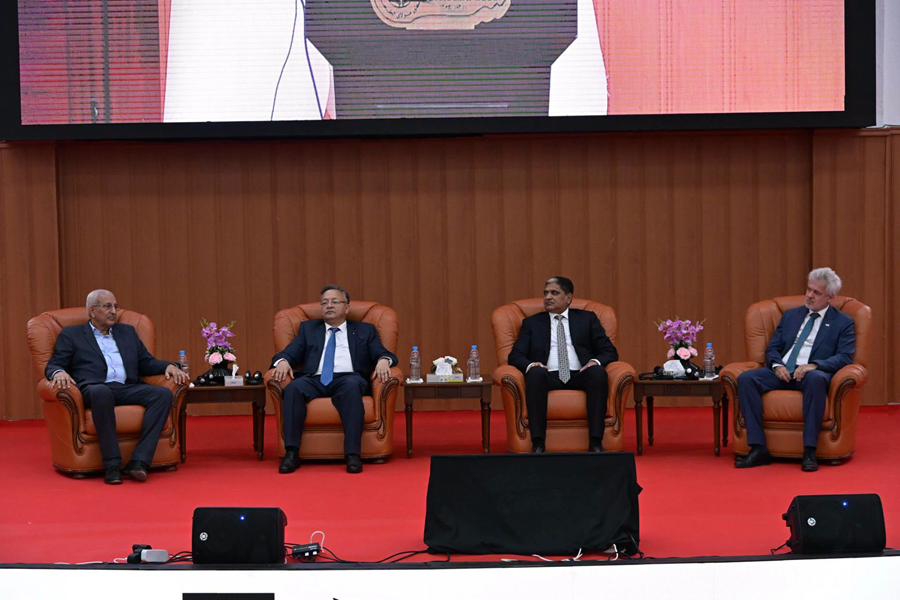
The Minister of Higher Education and Scientific Research, Mr. Kamel Baddari, presided today, September 28, 2026, at the “Dr. Moulay Tahar” University of Saïda, over the opening of the Fourth General Assembly of the “Africa Uni Net” network, with the participation of 55 representatives from universities in 17 member countries of the network.
In his address, the Minister of Higher Education and Scientific Research, Mr. Kamel Baddari, commended the efforts made by Algerian universities to strengthen their openness to universities worldwide, thereby expanding areas of cooperation and promoting exchanges in scientific and research activities, as well as the transfer of expertise and knowledge among academics and researchers, contributing to improved academic and research performance.
The visit’s programme also included the inauguration of the Faculty of Medicine, as well as a teaching room equipped with virtual immersion technology, a visit to a technical facility dedicated to advanced technologies, and the inauguration of smart and connected teaching rooms, as part of the process of transforming the university into a Fourth-Generation University.
The Minister of Higher Education and Scientific Research concluded his visit to the “Dr. Moulay Tahar” University of Saïda with a meeting with the university’s senior officials. On this occasion, he commended the level achieved by the university in terms of international openness, particularly through hosting a significant number of African and European higher education and research institutions, as well as developing genuine academic and scientific partnerships within the framework of South-South and North-South cooperation.
The Minister also congratulated the members of the university community for their efforts to foster a culture of digital transformation, develop digital infrastructure, and promote the use of modern technologies, thereby consolidating the university’s transformation into a modern and smart institution and strengthening the position of Saïda University within the network of Fourth-Generation Universities.
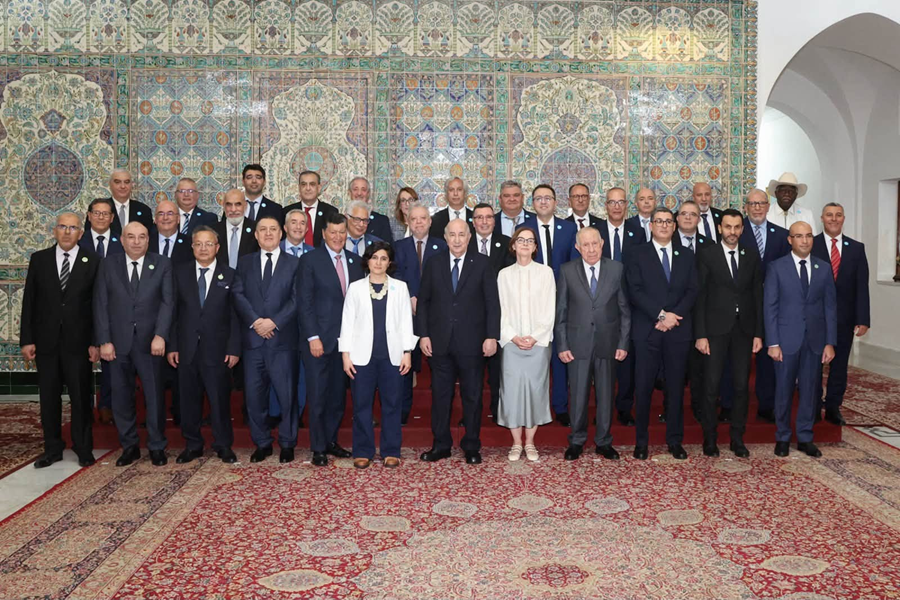
President of the Republic Mr. Abdelmadjid Tebboune received, on Sunday, September 27, 2026, at the Presidency of the Republic, the members of the Higher Council of the National Scientific Community Abroad.
The meeting was attended by Mr. Brahim Merad, Minister of State in charge of the General Inspectorate of State Services and Local Authorities; Army General Saïd Chanegriha, Minister Delegate to the Minister of National Defence and Chief of Staff of the People’s National Army; Mr. Kamel Baddari, Minister of Higher Education and Scientific Research; Mr. Mohamed Seddik Aït Messaouden, Minister of Health; Mr. Wassim Kouidri, Minister of Pharmaceutical Industry; Mr. Noureddine Ouadah, Minister of Knowledge Economy, Start-ups and Micro-enterprises; Mr. Nasreddine Ben Taïfour, Adviser to the President of the Republic in charge of Education, Higher Education, Vocational Training and Culture; and Mr. Sofiane Chaib, Secretary of State to the Minister of Foreign Affairs, in charge of the National Community Abroad.
In a statement following the President of the Republic’s meeting with the Council members, Professor Elias Zerhouni, Coordinator of the Council, said that he had noted during the meeting «the President of the Republic’s conviction that Algeria today needs to achieve genuine progress in various fields, drawing on its scientists both inside and outside the country».
In this regard, he stated: «We have the capabilities to do so, and our country is ready for this step», noting that the Council members had heard «the constructive ideas put forward by the President of the Republic» and had briefed him on the progress made so far towards «developing practical projects and programmes that will contribute to national development».
The following is the list of members of the Higher Council of the National Scientific Community Abroad:
Mr. Elias Zerhouni — Biomedical Engineering.
Mr. Kamel Youssef Toumi — Mechanical Engineering.
Mr. Belkacem Haba — Materials Science.
Mr. Karim Zeghib — Materials Science.
Mr. Mohamed Lachmi — Civil Engineering.
Ms. Lydia Bourouiba — Mathematics and Physics.
Ms. Malika Aït Boudris — Biology.
Mr. Smaïn Zerrouk — Geophysics.
Mr. Bachir Taouli — Medicine.
Mr. El Ayachine Kerbach — Logistics.
Mr. Noureddine Ghefour — Environmental Sciences.
Mr. Othmane Boukettaya — Computer Science.
Mr. Karim Djouani — Artificial Intelligence.
Mr. Mohamed Ben Naâmoun — Computer Science.
Mr. Touhami Mekrani — Chemistry.
Mr. Karim Chouli — University President.
Ms. Yasmine Belkaid — Immunology.
Mr. Mohamed Bournane — Physics.
Mr. Ezzeddine Bouzegsou — Materials Science.
Mr. Abdelaziz Hamzaoui — Mechanical Engineering.
Mr. Boualem Ben Attallah — Computer Science.
Mr. Mohamed Ben Omar Senouci — Computer Engineering.
Mr. Abdelhamid Mellouk — Artificial Intelligence.
Mr. Abdelhak Zoubir — Electrical Engineering.
Mr. Mohamed Kakoua — Animal Production.
Mr. Yahia Chebloun — Biology.
Mr. Fayçal Djeridane — Medicine.
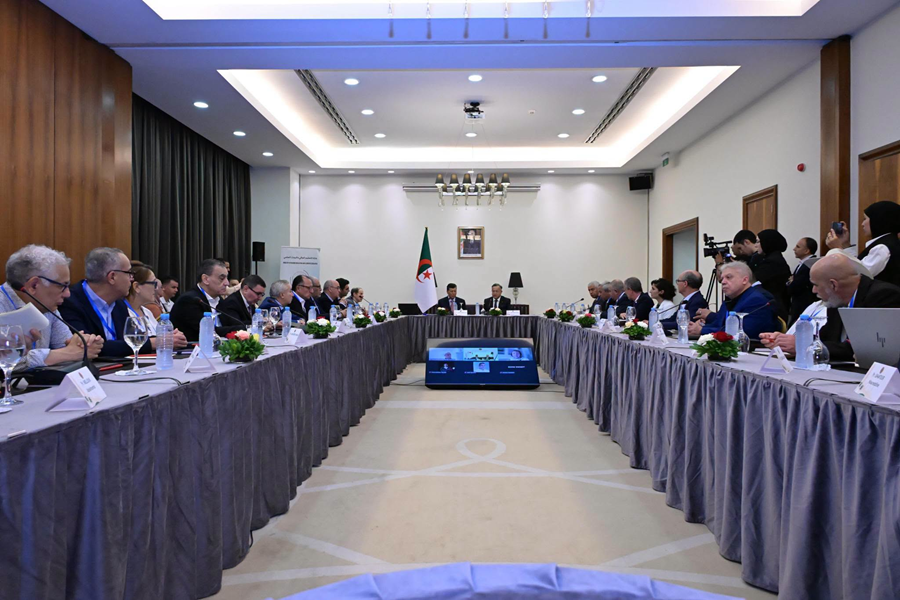
The proceedings of the first meeting of the Higher Council of the National Scientific Community Abroad began today, sunday, September 27, 2026, in Algiers, in implementation of the provisions of Presidential Decree No. 26-293 dated 25 Rabie El Aouel 1448, corresponding to September 7, 2026, establishing this higher advisory body, placed directly under the President of the Republic, endowed with legal personality and financial autonomy, with its headquarters located in the wilaya of Algiers.
In his keynote address during the opening session, the Minister of Higher Education and Scientific Research praised the strong sense of national commitment demonstrated by Algerian scientists and highly qualified professionals abroad, who have responded to the call of the homeland and placed their expertise and capabilities at the service of its scientific and economic development.
Mr. Kamel Baddari stressed that the establishment of this Council reflects the political will of the President of the Republic, Mr. Abdelmadjid Tebboune, to establish a permanent and structured institutional framework for mobilizing Algerian expertise across different countries and making it an active partner in the national development process. This includes connecting Algerian scientific expertise abroad with the national higher education, scientific research and innovation system, drawing on their expertise to provide scientific and technological advice, supporting a rapid and effective transition towards a knowledge-based economy, and advancing the development of modern technologies.
He added that the establishment of this Council aims to move from occasional relations and scattered contacts towards a permanent and structured institutional partnership, thereby ensuring continuity of cooperation and the optimal mobilization of Algerian expertise residing abroad.
He further noted that Algeria has a rich pool of internationally recognized expertise, talent and knowledge capable of providing strong momentum to institutional and technological modernization and strengthening the capacities of the national system in the fields of science, innovation and technology.
For his part, the Council’s Coordinator, Mr. Elias Zerhouni, outlined in his address the strategic dimensions of the missions entrusted to this body. He emphasized that the Council will work to put forward proposals and perspectives concerning projects of national importance, assess their scientific and technological viability, contribute to the country’s development process, strengthen knowledge exchange and strategic foresight in advanced and emerging technologies, and promote national and international scientific dialogue on current issues and challenges.
The inaugural session was attended by the Council’s President and members of the General Assembly, which comprises 28 members, including 27 scientists and experts from the National Scientific Community Abroad, selected on the basis of their international scientific standing and their priority strategic areas of expertise, in addition to six representatives of strategic ministerial sectors and three executives of economic institutions abroad involved in research and development activities.
During this session, participants are examining and adopting the Council’s draft internal regulations, setting the agenda, establishing specialized committees, and preparing the annual work plan, with a view to coordinating efforts and examining projects of national importance through an institutional and methodological approach.
The proceedings are expected to result in recommendations, studies and comprehensive annual reports to be submitted directly to the Presidency of the Republic. These outputs will contribute, in particular, to assessing the scientific and technological feasibility of major projects and providing the analyses and expertise needed to inform public policy, in support of the country’s sustainable development objectives.

As part of the monitoring and evaluation of the performance of the Chahid “Abdelhafid Ihaddaden” Scientific and Technological Hub in Sidi Abdellah, the Minister of Higher Education and Scientific Research, Mr. Kamel Baddari, chaired a working meeting on the afternoon of September 23, 2026, at the Ministry’s headquarters.
The meeting brought together the Director General of Education and Training, the Director General of Scientific Research and Technological Development, the directors of the five National Higher Schools affiliated with the hub, as well as the directors of the central administration.
The meeting focused on examining ways to enhance the hub’s performance and strengthen its scientific and innovation profile, through two main areas:
First: Promoting scientific and innovative activities and strengthening scientific excellence, by supporting scientific and innovation initiatives, encouraging high-value-added projects, and fostering an environment conducive to research, development and excellence.
Second: Strengthening international engagement, through activating academic and scientific partnerships with leading universities and international institutions, attracting expertise and highly qualified professionals, enhancing the mobility of students, faculty members and researchers, and developing international exchange and cooperation programs.
During the meeting, Mr. Baddari stressed the need to develop the Sidi Abdellah Scientific and Technological Hub into a national driving force in artificial intelligence, mathematics, cybersecurity and advanced technologies, as well as a benchmark model for the modern Algerian university.
He also emphasized the importance of positioning the hub as a center of scientific excellence and innovation, capable of making an effective contribution to the national economy, transforming knowledge and scientific research outcomes into added value, and strengthening the presence and international engagement of the Algerian university with leading global universities and scientific and technological institutions.
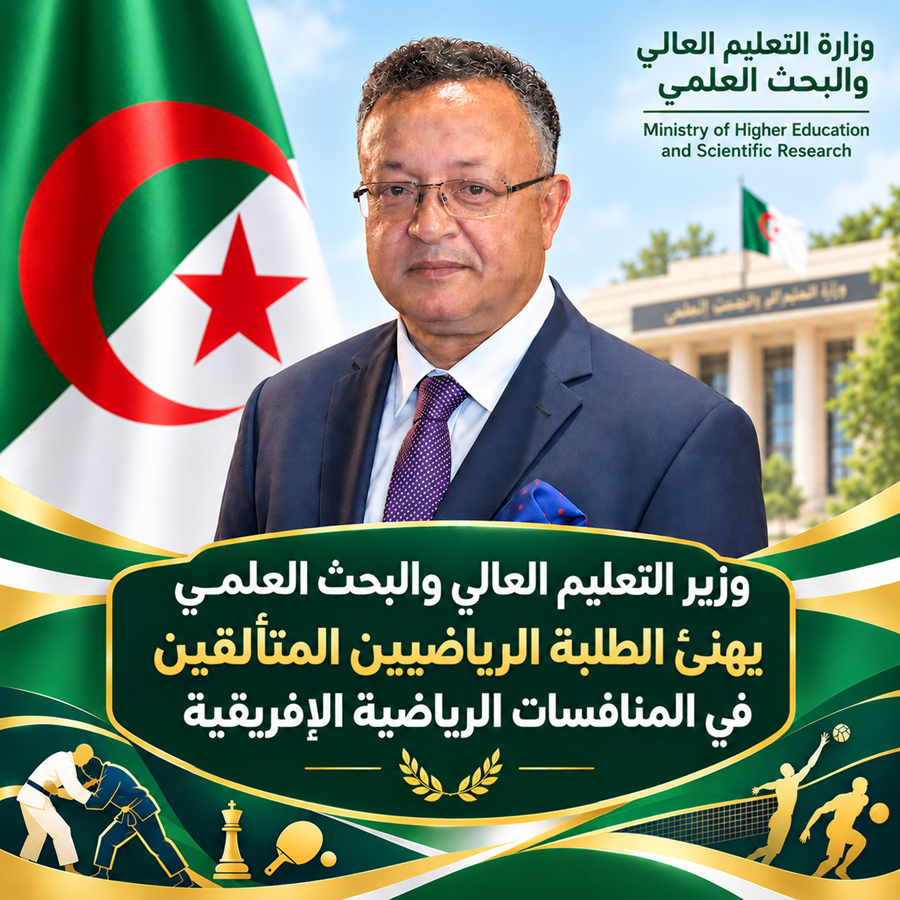
The Minister of Higher Education and Scientific Research, Mr. Kamel Baddari, congratulated the student athletes who distinguished themselves in African sports competitions. The congratulatory message reads:
“We congratulate our students, members of the national university team, on these outstanding sporting achievements and performances.
In judo:
Students from the national university team who participated in the 12th African University Games, held at the American University in Cairo, won a total of 19 medals, distributed as follows:
• 7 gold medals;
• 7 silver medals;
• 5 bronze medals.
In chess, table tennis, women’s volleyball, and men’s basketball, our students won 13 medals:
• 4 gold medals;
• 4 silver medals;
• 5 bronze medals.
We also extend our warmest congratulations to champion and student Rayan Skour, a seventh-year medical student, on winning the bronze medal in the women’s team event during her participation in the African Karate Championships.
Wishing Rayan and all our student champions even greater success, achievements, and distinction!
A source of pride for our universities and an honor for Algerian university sport.”
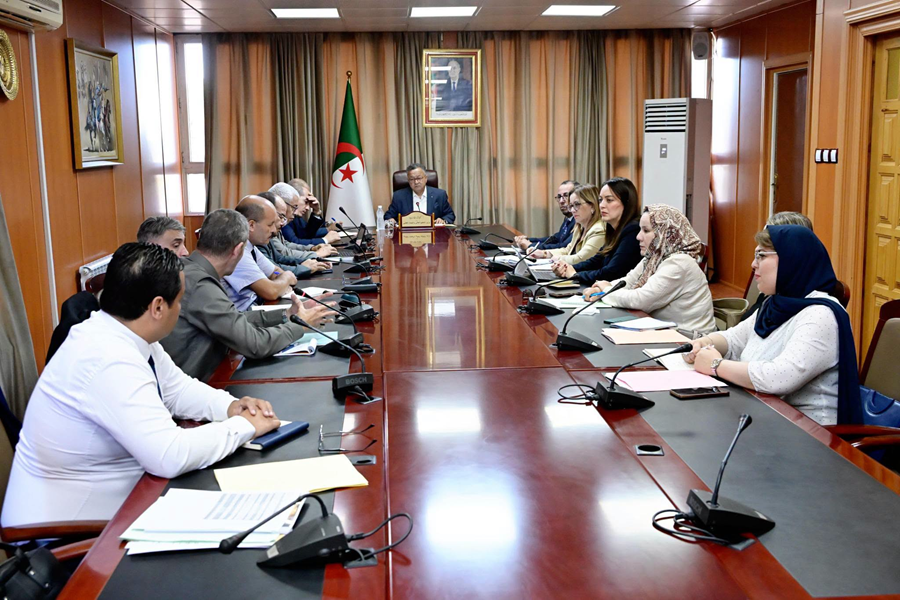
The Minister of Higher Education and Scientific Research, Mr. Kamel Baddari, chaired a meeting on Tuesday evening, September 15, 2026, at the Ministry’s headquarters, devoted to monitoring progress in the implementation of several scientific research projects and the development of research outputs with technological and industrial potential.
The meeting was attended by the Director General of Scientific Research and Technological Development, central administration executives, and the directors of four research centers: the Research Center for Industrial Technologies, the Research Center for Physical and Chemical Analysis, the Research Center for Semiconductor Technology for Energy Applications, and the Center for the Development of Advanced Technologies.
The meeting provided an opportunity to review the current status of several strategic technology projects, including the development of a humanoid robot and a robotic dog, the commissioning of the Clean Room, and the completion of the final stages of the design and manufacturing of RFID chips. Discussions also covered lithium battery technologies, photovoltaic cells, drone manufacturing, the development of the Algerian electric car, gelatin production, as well as other products and outputs resulting from scientific and technological research.
The meeting also addressed ways to move from laboratory development and experimentation to the stages of valorization, industrialization, and commercialization, particularly for products that have reached an advanced level of technological maturity, such as photovoltaic panels and physical and chemical analysis services. In this regard, emphasis was placed on accelerating the establishment and development of spin-offs arising from scientific research and on transforming research and innovation results into value-added products and services that contribute to strengthening the role of scientific research in the national economy.
Mr. Baddari emphasized that research centers are now called upon to achieve a qualitative transformation in the process of valorizing research results, moving from “producing knowledge and innovation to producing value”, and from focusing primarily on patents and prototypes to developing products and solutions that can be manufactured, commercialized, and economically exploited. This approach aims to make scientific research a genuine driver of economic development and contribute to building a national economy based on knowledge and innovation.

As part of the field monitoring of the preparations underway for the new academic year, the Minister of Higher Education and Scientific Research, Mr. Kamel Baddari, conducted an inspection visit on Monday evening, September 14, 2026, to the “El Alia” and “Bouraoui Ammar” university residences, to assess their readiness to receive students and ensure that appropriate living conditions are provided.
During the visit, the Minister inspected the various university facilities and services and reviewed the readiness of the rooms, residential pavilions, and university restaurants. He also assessed the availability of appropriate hygiene and security conditions, with a view to providing students with a suitable university environment.
The Minister also inquired about the progress of the ongoing renovation and rehabilitation works in the residential pavilions, confirming that all remaining wings will undergo renovation and modernization operations by June 2027, thereby contributing to improving living conditions and enhancing the quality of university services.
At the conclusion of the visit, the Minister stressed the need to intensify efforts and continue working to ensure a successful start to the new academic year, emphasizing that providing an appropriate, comfortable, and secure university environment is a key pillar in enabling students to pursue their studies under the best possible conditions.

The Minister of Higher Education and Scientific Research, Mr. Kamel Baddari, once again congratulated the National University Team through his official social media account, following its outstanding performance at the African University Games. The congratulatory message read as follows:
My warmest congratulations to my student-athletes, members of the National University Team in wrestling and taekwondo, participating in the 12th African University Games, held at the American University in Cairo, on this outstanding sporting achievement, crowned by the following medal haul:
· 7 gold medals
· 3 silver medals
· 5 bronze medals
This achievement reflects your determination, talent, and competitive spirit, and demonstrates the excellence of Algerian university sport on the African stage.
I am immensely proud of you and of the distinguished results you have achieved, which have once again raised the Algerian flag high.
Congratulations to you all, and may you achieve even greater success and distinction. Always onward and upward!
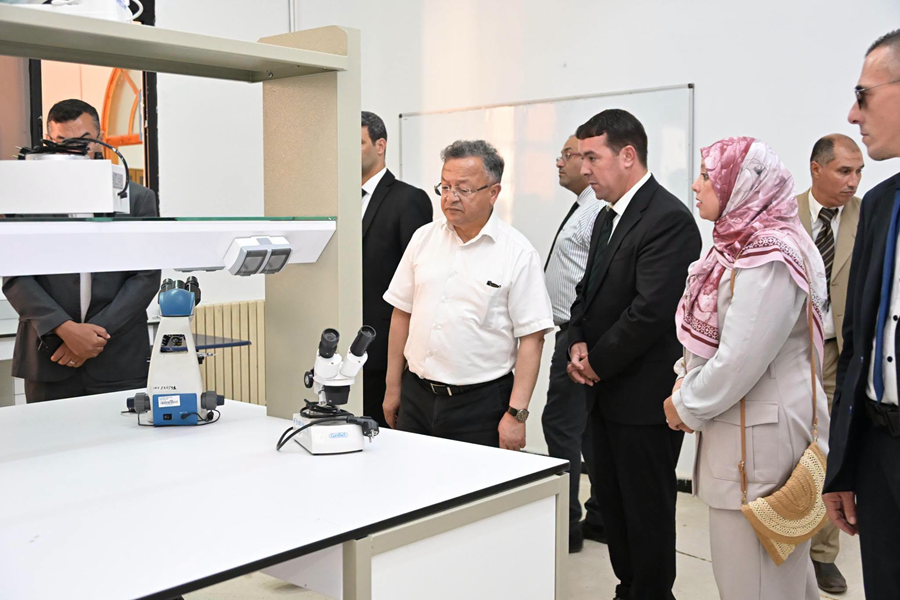
Minister of Higher Education and Scientific Research, Mr. Kamel Baddari, conducted a visit to the University of Médéa today, 12 September 2026, during which he held a meeting with the deans of the faculties and university officials. The meeting focused on ways to improve the performance of the Algerian university and strengthen its openness, enabling it to play a more effective role in the scientific, economic and social spheres.
The meeting provided an opportunity to emphasize several strategic priorities, notably:
• Strengthening digital transformation and expanding the use of digital solutions in management and various university services.
• Accelerating the transition towards “University 4.0” (Empowerment University) in line with current technological and scientific developments.
• Fostering a culture of entrepreneurship and innovation within the university environment and encouraging students to take initiatives and create projects.
• Enhancing the quality of student education and training and aligning it with future requirements and labour-market needs.
• Developing a strategic and forward-looking vision that enables the university to better anticipate changes and contribute to decision-making.
• Strengthening university sports as an essential component of a comprehensive and balanced university life.
• Activating the university’s economic role and positioning it as an active partner in national development, value creation and wealth generation.
• Developing twinning programmes and national and international partnerships, expanding teaching in English, and extending university activities until 10:00 p.m. (22:00), thereby optimizing the use of university facilities.
These orientations form part of a vision aimed at transforming the university into an integrated space for the production and valorization of knowledge and innovation, as well as a genuine driver of economic and social development. This will enable it to better respond to transformations, anticipate future developments and contribute to shaping the future.
The Minister’s visit also included an inspection of several facilities and structures at the University of Médéa, including:
• The Faculty of Law, following renovation and rehabilitation works, to assess their readiness to receive students and provide suitable conditions for education and study.
• The University Theatre Hall, with a capacity of 1,000 seats, serving as a cultural and artistic space that contributes to enriching university life, hosting various cultural and artistic activities, and providing students with an appropriate environment for creativity and expression.
• The annex of the Higher Normal School, where the Minister reviewed its operating conditions and assessed its readiness to welcome students for the 2026–2027 academic year, ensuring appropriate conditions for education, training and academic supervision.